Gas station game machines: revenue share or buy your own?
Thinking about game machines for your gas station? A plain look at revenue share placement vs. buying a Fortune cabinet for $3,500, plug and play, plus floor space, service and what to ask first.
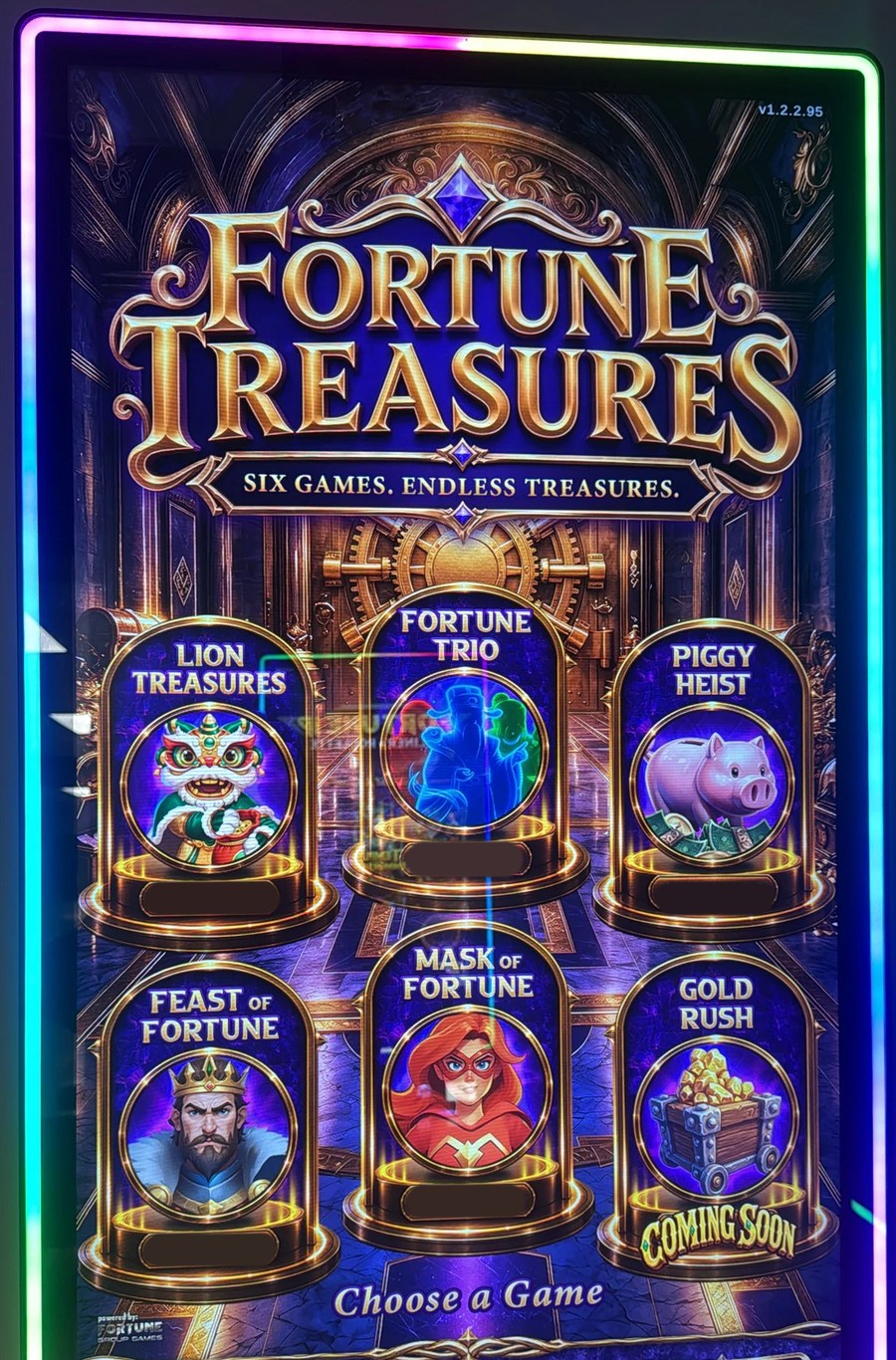
If you run a gas station, you have probably been asked about game machines more than once. A route operator stops in, a customer asks if you have any, or you see a busy corner at the station down the road and wonder whether it would work for you.
The first real decision is not which game to pick. It is how the machine gets into your store: does an operator place it on a revenue share, or do you buy it and own it outright? This guide walks through both paths in plain terms so you can pick the one that fits your store.
Start with your floor space
Before you talk money, walk your store. Most gas station game machines need a spot that is:
- Visible but out of the way. Near the counter is ideal, so staff can keep an eye on the area, but not where it blocks the checkout line or the cooler doors.
- Close to a standard outlet. Cabinets plug into a normal wall outlet. Running extension cords across the floor is a bad idea.
- Big enough for 2 or 3 machines. One machine alone is easy to miss. A small group of 2 or 3 makes a clear "game corner" that regulars learn to look for.
If you can give up a few feet of wall, you have room for a game area. If you can't, an ATM kiosk is often a better first add (more on that below).
Path 1: Revenue share placement
With revenue share, an operator places the machine in your store, and you split what it earns. You do not pay for the cabinet.
How it usually works:
- You agree on a location in the store and sign a placement agreement with the operator.
- The operator delivers, installs and services the machine.
- The operator collects on a regular schedule and settles up with you based on the agreed split.
Why store owners like it:
- No upfront cost. You get machines in the store without buying them.
- Less work. Service, repairs and game updates are on the operator.
- Easy to test. It is a low-risk way to see whether your customers play before you commit money.
What to watch for:
- Read the agreement closely: length of term, who handles repairs, how often collections happen and how you can end it.
- Ask the operator how many stores they already service nearby. A local operator responds faster when something breaks.
Arcade Ops leads with revenue share placement on Fortune machines for exactly these reasons. You can see how Fortune placement works on the Fortune page.
Path 2: Buy your own Fortune cabinet
Some owners would rather own the machine. With Fortune, you can buy a cabinet for $3,500, plug and play. That includes a 6-game pack, and the newest title is Fortune Treasures.
Why some owners buy:
- You own the asset. The machine is yours, not the operator's.
- You control the floor. You decide where it goes, how many you add, and when.
- No ongoing split with an operator. Since you own the machine, there is no placement split to share.
What to think about first:
- Who will service it? If you own the cabinet, you need a plan for repairs and upkeep. Ask about warranty and support before you buy.
- Your local rules. Skill game rules vary by state, and sometimes by county or city. Check what is allowed where your store is before you order. Our states page shows where Fortune and AOG are offered.
- How many to start with. Buying one machine to test is fine, but the "2 or 3 machines" advice still applies once you know it works.
Full pricing for Fortune, the ATM kiosk and the rest of the lineup is on the pricing page.
Revenue share vs. buying: a quick comparison
| Revenue share | Buy your own Fortune | |
|---|---|---|
| Upfront cost | None | $3,500 per cabinet, plug and play |
| Who owns the machine | Operator | You |
| Who services it | Operator | You (with warranty/support) |
| Best for | Testing, low-effort stores | Owners who want control and ownership |
There is no wrong answer. Many store owners start on revenue share, see how their customers respond, and then decide whether to buy machines of their own later.
Other machines that fit a gas station
Game cabinets are not the only option. Two others come up often:
AOG Sweeps game kiosk. AOG is a sweepstakes game/platform, and the AOG Sweeps game kiosk sits on or near the counter so customers can sign up. It takes very little floor space, which makes it a good fit for smaller stores. Players must be 18+. Learn more on the AOG page or in our guide on adding an AOG Sweeps game kiosk to your store.
ATM kiosk. An ATM kiosk is $6,000 and is one of the simplest machines a gas station can add. It also pairs well with a game corner, since customers are already standing nearby. See adding an ATM kiosk to your store.
Questions to ask before you say yes
Whichever path you choose, ask these before anything is installed:
- Is this machine allowed in my state and county?
- Who fixes it, and how fast?
- How long is the agreement, and how do I end it? (revenue share)
- What warranty and support come with it? (buying)
- Can I start with 2 or 3 machines and add more later?
- Who handles game updates?
A good operator or seller will answer all six without hesitation.
The bottom line
Gas station game machines can turn an unused corner into a spot your regulars come back to. If you want the easiest start, go with revenue share placement. If you want to own the machine and control your floor, buy a Fortune cabinet for $3,500, plug and play with the 6-game pack and Fortune Treasures. Either way, start with good floor space, check your local rules, and ask the right questions.
Ready to talk about your store? Start on the Fortune page, check the states page, or browse more guides on the Arcade Ops blog.
Amusement machines for bars and game rooms: a plain buyer's guide
Thinking about amusement machines for your bar or game room? A plain guide to space, power, placement vs. buying a Fortune cabinet for $3,500, adding an ATM kiosk, and what to ask any seller.
How to start a skill game route: a plain guide for route operators
A practical guide for new and growing route operators: picking locations, choosing machines, working with store owners, and keeping a skill game route running smoothly.