How to start a skill game route: a plain guide for route operators
A practical guide for new and growing route operators: picking locations, choosing machines, working with store owners, and keeping a skill game route running smoothly.
A skill game route is a set of machines you place and look after in other people's businesses: convenience stores, gas stations, vape shops, grocers and bars. The store gets foot traffic and a reason for customers to stay a few extra minutes. You get a business that grows one location at a time.
If you are thinking about becoming a route operator, or you already run a few machines and want to grow, this guide covers the basics: where to place machines, what to put in them, how to talk to store owners, and how to keep the route running week after week.
What a route operator actually does
A route operator is the person or company that owns or manages the machines on location. Day to day, that means:
- Finding stores that want game machines and signing placement agreements with them.
- Delivering, installing and setting up each machine.
- Visiting locations on a regular schedule to check machines, handle service and keep the owner happy.
- Tracking how each location performs so you know where to add machines and where to move them.
The job is part sales, part logistics and part customer service. The operators who do well treat every store owner as a long-term partner, not a one-time sale.
Step 1: Check the rules in your state first
Skill games, pre-reveal games and sweepstakes platforms are regulated differently from state to state, and the rules change. Before you sign a single location, confirm what is allowed where you plan to operate. Our state availability page shows where our machines and platforms are offered today. When in doubt, talk to a local attorney who knows amusement and gaming law in your state.
Step 2: Pick the right locations
Not every store is a good fit. The best locations usually share a few traits:
- Steady foot traffic. Gas stations and c-stores on busy roads see the same regulars every day.
- Space near the counter. Machines that staff can see are easier to look after.
- An owner who wants it. A store owner who is excited about games will keep the area clean, mention the machines to customers and call you quickly if something needs attention.
- Room to grow. A location that starts with one machine and does well can often take a second or third.
Start close to home. A tight cluster of locations means shorter drives, faster service calls and lower costs per stop.
Step 3: Choose your machines
Your machine mix is what customers actually see, so it matters. Most operators combine a few types:
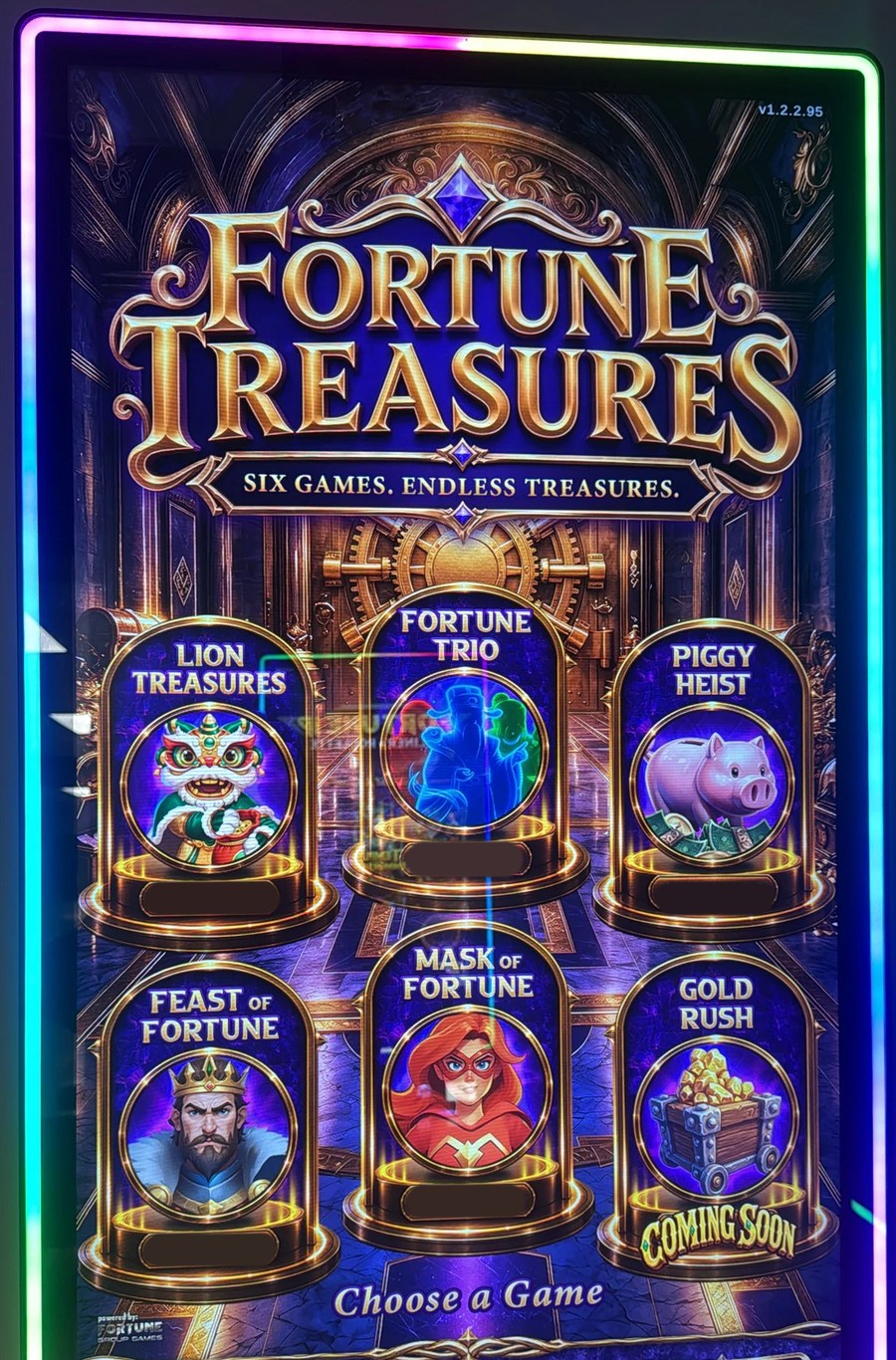
Skill game cabinets. Fortune is our skill game cabinet. Each one comes with a 6-game pack, and the newest title is Fortune Treasures. Fortune is sold all in, so there are no surprise add-ons, and we also partner on vending for the right locations. Current pricing is on our pricing page.
Pre-reveal games. Pre-reveal games show the player the result of the next play before they commit. If you are new to the format, read our plain guide to pre-reveal games before adding them to your route.
AOG Sweeps. AOG Sweeps is a sweepstakes game platform for players 18 and older. It runs on a tablet loaded with the AOG software, which displays a QR code at the counter. Players scan the code to register and play online, so there is no large cabinet to move and very little floor space needed. For many operators it is a second way to add value at a location that already has a Fortune cabinet.
ATM kiosk. An ATM kiosk is $6,000 flat and is one of the simplest machines a store can add. It pairs naturally with game machines because it gives customers a convenient service right where they already are.
A good starting route often has one or two machine types per location. Add more once you know what each store's customers like.
Step 4: Talk to store owners the right way
Store owners hear pitches all the time. What gets you a yes:
- Keep it simple. Explain what the machine is, how much space it needs and what the owner has to do day to day (usually very little).
- Be clear about the arrangement. Whether the owner is buying a machine or you are placing it as a vending partnership, put the terms in writing.
- Show up on time. Your first delivery and install set the tone for the whole relationship.
- Follow up. A quick visit or call a week after install shows the owner you are paying attention.
Never promise a store owner specific earnings. Every location is different, and honest expectations build trust that lasts.
Step 5: Run the route like a business
Once your first machines are placed, the work shifts to keeping them running and growing the route:
- Set a visit schedule. Regular stops catch problems early and keep you in front of the owner.
- Keep simple records. Track each location's machines, service history and notes from every visit.
- Fix issues fast. A machine that is down for a week costs you and the store, and it hurts the relationship.
- Review your locations. Every few months, look at which stores are doing well and which are not. Move machines from weak spots to stronger ones.
- Grow in clusters. Add new locations near the ones you already serve.
Common mistakes new operators make
- Signing locations before checking state rules.
- Spreading out too far, too fast, so every service call is a long drive.
- Choosing machines on price alone instead of reliability, support and the games players actually enjoy.
- Skipping written agreements with store owners.
- Going quiet after install. The operators who visit regularly keep their best locations the longest.
How Arcade Ops helps route operators
Arcade Ops works with route operators who want reliable machines and a straightforward partner. We offer Fortune skill game cabinets with the 6-game pack and Fortune Treasures, the AOG Sweeps platform, and the ATM kiosk, along with help on delivery, setup and placement.
If you are building a new route or adding to an existing one, start with our pricing page, check where we operate, and browse the rest of the Arcade Ops blog for more guides. When you are ready, reach out and we will walk you through the options that fit your locations.
Amusement machines for bars and game rooms: a plain buyer's guide
Thinking about amusement machines for your bar or game room? A plain guide to space, power, placement vs. buying a Fortune cabinet for $3,500, adding an ATM kiosk, and what to ask any seller.
Gas station game machines: vending partnership or buy your own?
Thinking about game machines for your gas station? A plain look at vending placement vs. buying a Fortune cabinet for $3,500, plug and play, plus floor space, service and what to ask first.